- 1 Historical Milestones
- 2 The Case of Mary Mallon (“Typhoid Mary”)
- 3 Taxonomy and Classification
- 4 Clinical Dichotomy: Typhoidal vs. Non-Typhoidal Salmonella
- 5 Morphology and Physiology
- 6 Pathogenesis and Cellular Invasion
- 7 Clinical Manifestations and Complications
- 8 Diagnostic Methodology
- 9 Treatment and Prevention
The genus Salmonella comprises some of the most pervasive and clinically impactful enteric pathogens in human history. From ancient plagues to modern foodborne outbreaks, Salmonella species cause a vast clinical spectrum—ranging from self-limiting acute gastroenteritis (salmonellosis) to life-threatening systemic bacteremia and typhoid fever.
Historical Milestones
Long before the microbial etiology was isolated, physicians recognized the contagious nature of enteric fevers:
- 1873: Bristol physician William Budd demonstrated that typhoid fever was transmitted through drinking water contaminated with feces from infected individuals.
- 1880: Karl Joseph Eberth, a student of Rudolf Virchow, observed the typhoid bacillus in spleen and abdominal lymph node autopsies of typhoid victims, confirmed subsequently by Robert Koch.
- 1885: American veterinarian Daniel Elmer Salmon and his pioneering research associate Theobald Smith isolated the hog cholera bacillus (Salmonella enterica serovar Choleraesuis). The entire bacterial genus was subsequently named Salmonella in Salmon’s honor.
The Case of Mary Mallon (“Typhoid Mary”)
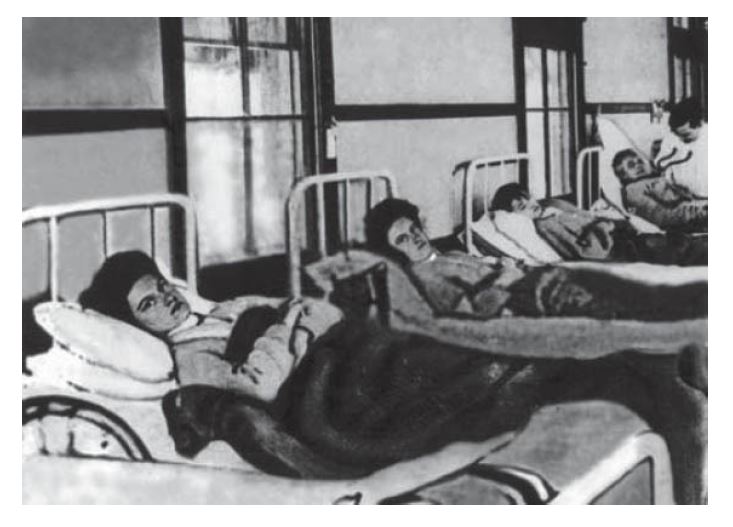
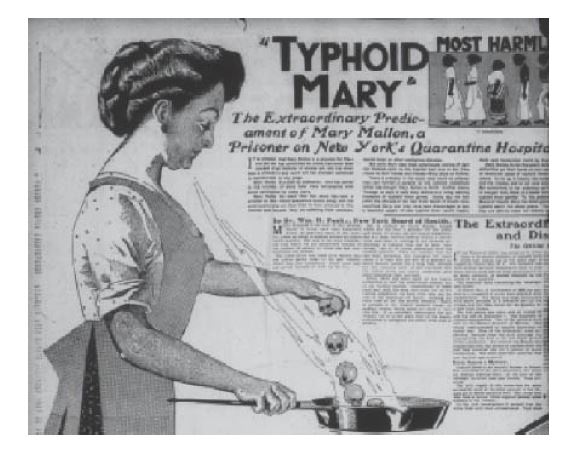
The medical chronicle of Mary Mallon (1869–1938) stands as the classic epidemiologic illustration of a healthy, asymptomatic human disease carrier:
- The Investigation (1906–1907): Mary Mallon, an Irish immigrant working as a private cook for wealthy New York families, left a trail of typhoid fever outbreaks in household after household. Sanitary engineer George Soper systematically traced the outbreaks to Mallon’s unheated specialty dessert—fresh sliced peaches and ice cream.
- Asymptomatic Carriage: Although Mallon appeared in vigorous physical health, bacteriologic analysis of her stool revealed immense quantities of live Salmonella enterica serovar Typhi. The bacteria colonized her gallbladder and chronically shed via bile into the gastrointestinal tract.
- Quarantine and Relapse: Mallon was detained on North Brother Island in New York’s East River. Released in 1910 under a legal pledge never to work as a cook again, she assumed pseudonyms and returned to culinary work. In 1915, she triggered a major outbreak at Manhattan’s Sloane Hospital for Women, infecting 25 physicians, nurses, and staff, resulting in two fatalities.
- Permanent Confinement: Mary was returned to North Brother Island, where she remained quarantined until her death in 1938. Postmortem examination confirmed active Salmonella colonies inhabiting her gallstones.
Taxonomy and Classification
The taxonomy of Salmonella has evolved dramatically with molecular phylogenetics. Today, the genus comprises two distinct species:
| Classification Rank | Taxonomic Name |
|---|---|
| Domain | Bacteria |
| Phylum | Proteobacteria |
| Class | Gammaproteobacteria |
| Order | Enterobacterales |
| Family | Enterobacteriaceae |
| Genus | Salmonella |
| Species | Salmonella enterica and Salmonella bongori |
Salmonella enterica Subspecies
Salmonella enterica encompasses over 2,600 recognized serotypes (serovars), divided into six subspecies:
- Subspecies I: enterica (predominant cause of warm-blooded animal and human disease; > 99% of clinical isolates)
- Subspecies II: salamae
- Subspecies IIIa: arizonae
- Subspecies IIIb: diarizonae
- Subspecies IV: houtenae
- Subspecies VI: indica
Salmonella bongori primarily colonizes cold-blooded reptiles and amphibians, though human opportunistic infections occasionally occur.
Clinical Dichotomy: Typhoidal vs. Non-Typhoidal Salmonella
| Feature | Typhoidal Salmonella (S. Typhi, S. Paratyphi A, B, C) | Non-Typhoidal Salmonella (S. Typhimurium, S. Enteritidis) |
|---|---|---|
| Reservoir | Strictly human-restricted | Zoonotic (poultry, cattle, swine, reptiles, pets) |
| Transmission | Fecal-oral via contaminated human water/food | Foodborne (undercooked poultry, eggs, raw produce) |
| Pathology | Disseminates into reticuloendothelial system | Localized acute mucosal inflammation in ileum/colon |
| Clinical Syndrome | Enteric fever: step-ladder fever, bradycardia, rose spots | Acute gastroenteritis: watery diarrhea, vomiting, cramps |
| Bacteremia Rate | High (> 90% in untreated cases) | Low (< 5% in immunocompetent adults) |
| Antibiotics | Mandatory (Ceftriaxone, Azithromycin) | Usually contraindicated unless invasive or high-risk |
Morphology and Physiology
Salmonella organisms are facultatively anaerobic, non-spore-forming Gram-negative bacilli measuring 0.7–1.5 µm in diameter and 2.0–5.0 µm in length.
Key characteristics include:
- Motility: Most serovars are motile via peritrichous flagella (except S. Gallinarum and S. Pullorum).
- Metabolism: Chemotrophic; ferment glucose with gas production.
- Biochemical Hallmarks:
- Lactose Negative: Differentiates Salmonella from E. coli on MacConkey agar (produces colorless, pale colonies).
- Hydrogen Sulfide (H₂S) Positive: Produces black colonies on Xylose Lysine Deoxycholate (XLD) and Hektoen Enteric (HE) agars due to ferric sulfide precipitation.
- Urease Negative and Indole Negative.
Pathogenesis and Cellular Invasion
Ingested Salmonella ──> Survival in Gastric Acid ──> Adhesion via Pili ──> T3SS-1 Effector Injection ──> Membrane Ruffling ──> Macrophage Survival (T3SS-2)- Gastric Acid Barrier: Ingested organisms must withstand gastric acidity; the infectious dose is lower in individuals on antacids or proton-pump inhibitors.
- Intestinal Invasion: Reaching the distal ileum, Salmonella targets microfold (M) cells in Peyer’s patches. It utilizes a Type III Secretion System (T3SS-1) encoded on Salmonella Pathogenicity Island 1 (SPI-1) to inject bacterial effector proteins (SipA, SopB, SopE) into host enterocytes. These effectors trigger actin cytoskeletal reorganization, producing “membrane ruffling” that forces the host cell to engulf the bacterium via macropinocytosis.
- Intracellular Survival: Inside macrophages, Salmonella deploys a second needle complex (T3SS-2, encoded on SPI-2) that prevents phagosome-lysosome fusion, enabling replication within a specialized Salmonella-containing vacuole (SCV).
- Inflammatory Diarrhea: Neutrophil recruitment, mucosal edema, and fluid exocytosis trigger the watery or bloody diarrhea typical of gastroenteritis.
Clinical Manifestations and Complications
Gastroenteritis (Food Poisoning)
Symptoms typically develop 6 to 72 hours after consuming contaminated food:
- Sudden onset nausea, abdominal cramping, and watery diarrhea (occasionally with blood and mucus)
- Fever, chills, headache, and myalgias
- Symptoms typically resolve spontaneously within 4 to 7 days in healthy adults.
Enteric Fever (Typhoid)
Incubation spans 7 to 14 days, presenting with persistent high fever (“step-ladder” rise), relative bradycardia (Faget’s sign), abdominal distention, hepatosplenomegaly, and faint macular “rose spots” on the trunk. Untreated cases risk life-threatening terminal ileal perforation and gastrointestinal hemorrhage.
Post-Infectious Complications
- Reactive Arthritis (Reiter’s Syndrome): Characterized by joint pain, conjunctivitis, and urethritis occurring weeks after gastrointestinal resolution.
- Irritable Bowel Syndrome (Post-Infectious IBS): Prolonged gastrointestinal motility disturbance.
- Vascular Graft and Bone Infection: High predilection for seeding atherosclerotic plaques and bones in patients with sickle cell disease (osteomyelitis).
Diagnostic Methodology
- Stool and Blood Culture:
- Blood cultures are positive in 80% of typhoid cases during the first week.
- Stool cultures plated onto selective media (XLD, MacConkey, Hektoen) reveal non-lactose-fermenting, H₂S-positive colonies.
- Serological and Molecular Identification: Isolates are subtyped using the Kauffmann-White-Le Minor classification scheme targeting O (somatic lipopolysaccharide), H (flagellar), and Vi (capsular) antigens, alongside whole-genome sequencing (WGS) via public health surveillance networks (PulseNet).
Treatment and Prevention
- Uncomplicated Gastroenteritis: Routine antibiotic therapy is not recommended; it does not shorten illness duration and prolongs fecal shedding of bacteria. Management relies on oral rehydration therapy.
- Severe / Typhoidal Infections: Empiric treatment begins with intravenous Ceftriaxone or oral Azithromycin, adjusted according to antimicrobial susceptibility testing in light of widespread fluoroquinolone resistance.
- Prevention: Thorough cooking of poultry and eggs to 165°F (74°C), avoiding unpasteurized dairy, separating raw meats from ready-to-eat foods, strict handwashing, and typhoid vaccination for travelers to endemic areas.