- 1 What Are Bacteriophages?
- 2 Working of Bacteriophage Therapy
- 3 Lytic versus Temperate Bacteriophages
- 4 Importance of Phage Therapy in Antimicrobial Resistance
- 5 Major Advantages of Bacteriophage Therapy
- 6 How Can Phages Overcome Bacterial Resistance?
- 7 Recent Clinical Advancements
- 8 Major Challenges Limiting Widespread Clinical Use
- 9 The Future of Bacteriophage Therapy
- 10 Conclusion: Can Predatory Viruses Help Us Fight Antimicrobial Resistance?
Antibiotics have transformed modern medicine, making once-deadly bacterial infections treatable and allowing procedures such as organ transplantation, chemotherapy, and major surgery to become safer. However, bacteria are evolving faster than our ability to develop new antibiotics. The emergence and spread of antimicrobial resistance (AMR) have made many bacterial infections increasingly difficult to treat.
Among the alternative approaches attracting renewed scientific attention is something surprisingly familiar: viruses. But these are not viruses that infect humans. They are bacteriophages, commonly known as phages, which naturally infect bacteria.
Some phages attach to bacterial cells, inject their genetic material, multiply inside them, and eventually destroy them. Scientists are now exploring whether these naturally occurring bacterial predators could help treat infections caused by multidrug-resistant (MDR) bacteria. This approach is called bacteriophage therapy, and it may become an important addition to the antimicrobial treatment toolbox.
What Are Bacteriophages?
Bacteriophages are viruses that specifically infect bacterial cells. They are among the most abundant biological entities on Earth and can be found in oceans, rivers, soil, wastewater, food, and the human microbiome.
A typical bacteriophage consists of:
- Capsid: A protein structure that protects the viral genetic material.
- Genetic material: Double-stranded or single-stranded DNA or RNA, depending on the phage.
- Tail: Present in many phages and involved in delivering genetic material into bacterial cells.
- Tail fibers or attachment proteins: Structures that recognize specific receptors on bacterial surfaces.
Unlike antibiotics, which act through chemical mechanisms, bacteriophages use biological recognition systems to identify their bacterial hosts. For example, a phage may recognize a particular receptor on the surface of Escherichia coli, Pseudomonas aeruginosa, or Staphylococcus aureus. Once attached, it can initiate infection and, in the case of a lytic phage, destroy the bacterial cell.
Importantly, bacteriophages do not normally infect human cells. Their host specificity is one of the main reasons they are being investigated as potential antibacterial treatments.
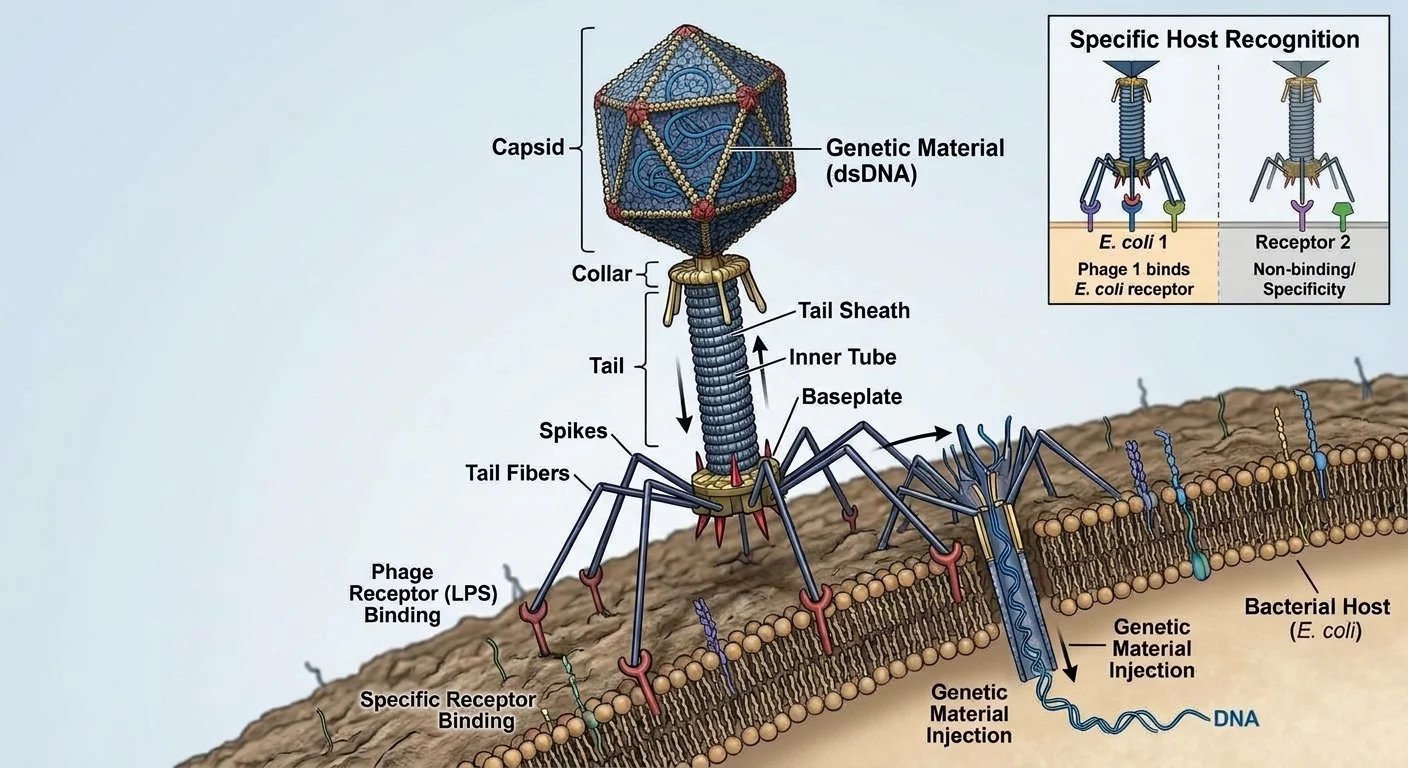 Figure 1. Anatomy of a tailed bacteriophage (capsid, collar, tail sheath, baseplate, spikes, and tail fibers) and specific host receptor recognition (LPS binding and viral DNA injection).
Working of Bacteriophage Therapy
The basic principle of phage therapy is straightforward: identify the bacterial pathogen responsible for an infection, select a bacteriophage capable of infecting it, and deliver the phage to the infected site. However, the biology behind this process is sophisticated:
1. Attachment to the Bacterial Cell
The process begins when a bacteriophage recognizes and attaches to a specific receptor on the bacterial surface. These receptors may include:
- Lipopolysaccharides (LPS) in Gram-negative bacteria
- Outer membrane proteins
- Teichoic acids in Gram-positive bacteria
- Pili and other surface structures
- Capsule or extracellular polysaccharide components
The interaction between phage attachment proteins and bacterial receptors determines whether a particular phage can infect a bacterial strain. This explains why one bacteriophage may effectively infect a bacterial isolate while another phage cannot.
2. Injection of Genetic Material
After attachment, many bacteriophages deliver their genetic material into the bacterial cell. The viral genome contains the instructions needed to produce new phage components and take control of the bacterial cellular machinery.
3. Replication and Assembly of New Phages
During the lytic cycle, the phage uses the bacterial cell’s resources to replicate its genome and produce viral structural proteins. New phage particles are assembled inside the infected bacterium.
4. Bacterial Cell Lysis
Once sufficient new phage particles have formed, phage-encoded proteins help break down the bacterial cell envelope. Two important proteins are:
- Holins: Proteins that disrupt the bacterial inner membrane.
- Endolysins: Enzymes that degrade bacterial peptidoglycan.
The bacterial cell eventually ruptures, releasing newly produced phages that can infect nearby susceptible bacteria. This process allows lytic bacteriophages to multiply at the site of infection when suitable bacterial hosts are available.
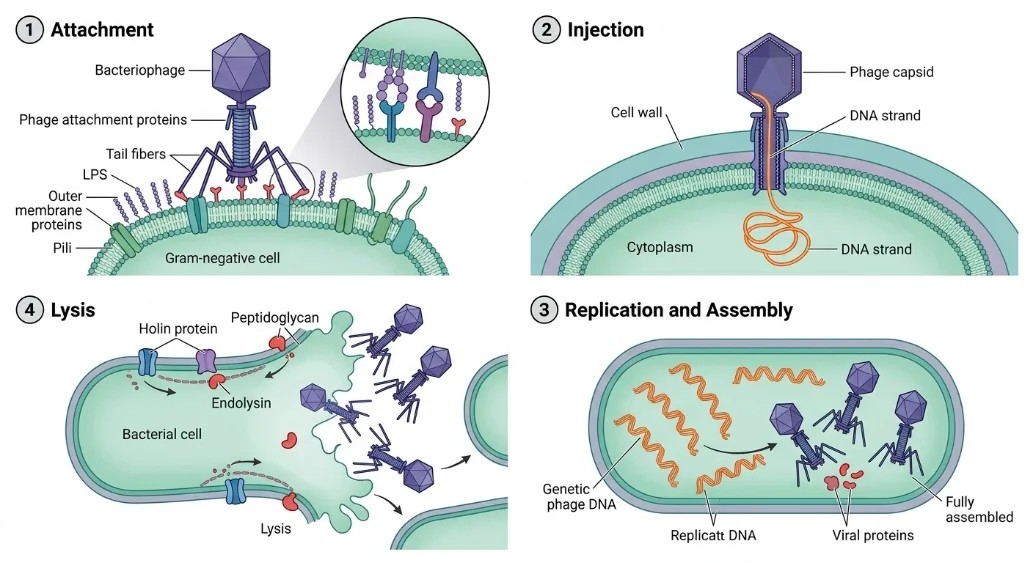 Figure 2. Step-by-step schematic of the lytic cycle: (1) Attachment to surface receptors, (2) Injection of viral DNA, (3) Replication and assembly of viral proteins, and (4) Cell lysis via holin and endolysin action.
Lytic versus Temperate Bacteriophages
Not all bacteriophages are appropriate for therapeutic applications. Their life cycles are particularly important when selecting candidates for treatment:
| Feature | Lytic Bacteriophages | Temperate Bacteriophages |
|---|---|---|
| Infection outcome | Replicate and destroy bacterial cells | Can integrate or persist in bacterial cells |
| Genetic behavior | Follow a productive lytic cycle | May enter lysogenic or lytic cycles |
| Bacterial killing | Directly cause cell lysis | May remain dormant without killing the host |
| Therapeutic suitability | Generally preferred | Generally avoided for conventional phage therapy |
| Main concern | Bacterial resistance may develop | Potential transfer of undesirable genes (toxins/AMR) |
Lytic phages are generally preferred because their infection cycle results in bacterial destruction. Temperate phages, on the other hand, can integrate their genomes into bacterial chromosomes as prophages. Some can also transfer bacterial genes through specialized transduction.
This creates a potential risk of transferring virulence or antimicrobial-resistance genes between bacteria. Therefore, therapeutic phage candidates require careful genomic screening to exclude undesirable genes and assess their potential for horizontal gene transfer.
Importance of Phage Therapy in Antimicrobial Resistance
Antimicrobial resistance occurs when microorganisms develop mechanisms that allow them to survive exposure to antimicrobial drugs that would normally inhibit or kill them. Bacteria can develop resistance through several mechanisms, including:
- Enzymatic degradation or modification of antibiotics
- Alteration of antibiotic target sites
- Reduced membrane permeability
- Active efflux of antimicrobial compounds
- Biofilm formation
- Acquisition of resistance genes through horizontal gene transfer
The spread of resistance has become particularly concerning among important hospital-associated pathogens:
- Pseudomonas aeruginosa: This opportunistic pathogen is associated with hospital-acquired pneumonia, bloodstream infections, wound infections, and chronic respiratory infections. Its intrinsic resistance mechanisms, combined with acquired resistance, can make treatment difficult.
- Acinetobacter baumannii: Multidrug-resistant A. baumannii is an important cause of hospital-acquired infections, particularly in intensive care units. Carbapenem-resistant strains are especially concerning.
- Klebsiella pneumoniae: This organism can acquire extended-spectrum beta-lactamases (ESBLs) and carbapenemase genes, reducing the effectiveness of commonly used antibiotics.
- Staphylococcus aureus: Methicillin-resistant S. aureus (MRSA) is associated with skin and soft-tissue infections, bloodstream infections, pneumonia, and device-related infections.
These organisms are among the major targets of modern phage research. Phage therapy offers a completely different antibacterial mechanism. Rather than relying on the same cellular targets as antibiotics, bacteriophages recognize specific bacterial receptors and use their own replication machinery to destroy susceptible bacterial cells.
This means that resistance to an antibiotic does not automatically make a bacterium resistant to bacteriophages. However, phage susceptibility must still be tested because bacteria can evolve resistance to phages as well.
Major Advantages of Bacteriophage Therapy
Activity against Multidrug-Resistant Bacteria
One of the most promising applications of phage therapy is its potential to target bacterial strains resistant to multiple antibiotics. Because phages use different mechanisms from conventional antibiotics, they may remain active against bacterial isolates that are difficult to treat with available drugs. This is particularly important for infections caused by MDR and extensively drug-resistant bacteria.
High Bacterial Specificity
Many bacteriophages infect only particular bacterial species or even specific strains within a species. This specificity may help preserve beneficial bacteria in the human microbiome compared with broad-spectrum antibiotics, which can affect both pathogenic and commensal bacteria. However, this advantage depends on the phage’s host range and the bacterial communities present at the infection site.
Potential Activity against Bacterial Biofilms
Biofilms are structured microbial communities embedded in a protective extracellular matrix. They commonly develop on medical devices, implants, chronic wounds, and damaged tissues. Biofilms can reduce antibiotic penetration and create bacterial populations with increased tolerance to antimicrobial treatment.
Some bacteriophages can penetrate biofilm structures, while others produce enzymes called depolymerases that degrade extracellular polysaccharides or capsule components. By disrupting the biofilm matrix, these phages may improve access to bacterial cells. Nevertheless, biofilm-associated infections remain challenging, and laboratory activity does not always translate into successful treatment in patients.
Self-Amplification at Infection Sites
Unlike conventional antibiotics, which do not reproduce, bacteriophages can multiply when susceptible bacterial hosts are present. This biological amplification may help increase phage numbers at the site of infection. However, successful replication depends on several factors, including bacterial density, phage access, local environmental conditions, and the patient’s immune response.
Potential to Work Alongside Antibiotics
Phage therapy does not necessarily need to replace antibiotics. In fact, combining bacteriophages with antibiotics may provide additional benefits in selected infections. Depending on the bacterial strain, phage and antibiotic combinations may produce synergistic effects, improve bacterial killing, or limit the emergence of resistance.
This approach is often described as phage-antibiotic combination therapy. The interaction is not always beneficial, however. Some antibiotic concentrations or treatment conditions may interfere with phage replication. Therefore, combinations need to be evaluated experimentally rather than assumed to be synergistic.
How Can Phages Overcome Bacterial Resistance?
An especially interesting feature of phage biology is the evolutionary relationship between bacteria and their viral predators. Bacteria can develop several mechanisms to avoid phage infection, including:
- Mutations or modifications in phage receptors
- Production of extracellular substances that prevent phage attachment
- Restriction-modification systems that degrade foreign DNA
- CRISPR-Cas systems that recognize and destroy phage genetic material
- Abortive infection systems that prevent successful phage replication
At first, these mechanisms appear to be a major limitation of phage therapy. However, bacterial resistance to phages can sometimes come with an evolutionary trade-off. For example, a bacterium may alter a surface receptor to avoid phage attachment. If that receptor also contributes to antibiotic resistance, virulence, or biofilm formation, the change may make the bacterium more vulnerable to another treatment.
This creates an interesting therapeutic possibility: using phages to drive bacteria toward a less harmful or more antibiotic-susceptible state. The outcome depends on the particular phage, bacterial strain, and receptor involved.
Phage Cocktails: Why Use More Than One Bacteriophage?
A major challenge in phage therapy is the narrow host range of many bacteriophages. A single phage may infect only a limited selection of bacterial strains. This can make it difficult to treat infections involving genetically diverse bacterial populations.
One strategy is to use a phage cocktail, which contains multiple bacteriophages selected to target the same pathogen. For example, a cocktail targeting Pseudomonas aeruginosa may contain several phages that recognize different bacterial surface receptors.
Potential advantages include:
- Broader bacterial strain coverage
- Reduced likelihood that one receptor mutation will provide complete phage resistance
- Multiple mechanisms of bacterial killing
- Potential disruption of different bacterial subpopulations
However, combining phages requires careful evaluation. Phages may interact with each other, differ in stability, or compete for bacterial hosts. A well-designed cocktail should therefore be tested for activity, compatibility, genetic safety, and stability.
Recent Clinical Advancements
Bacteriophage therapy is not merely a theoretical concept. It has been investigated in laboratory studies, animal models, clinical case reports, observational studies, and clinical trials:
A 2025 Study Involving Multidrug-Resistant Pseudomonas aeruginosa
A study published in Nature Medicine in April 2025 investigated personalized inhaled bacteriophage therapy in nine adults with cystic fibrosis and difficult-to-treat multidrug-resistant or pan-drug-resistant P. aeruginosa infections. The patients received personalized phage treatment through compassionate-use pathways.
The study demonstrated the feasibility of delivering personalized inhaled phage preparations in this challenging clinical setting and provided important evidence for further investigation. It is an encouraging development, but the small number of participants means that larger controlled studies are still needed to establish clinical effectiveness.
Evidence from Published Personalized Treatment Cases
A 2026 review published in JCI Insight examined 323 patients described in 83 published studies of personalized phage therapy. Among the patients for whom outcomes were reported:
- 78% experienced clinical improvement
- The targeted pathogen was eradicated in 61% of cases with available eradication data
- Most patients received phage cocktails, and 76% received antibiotics alongside phage treatment
These findings are encouraging, but they should be interpreted carefully. Published case reports and observational studies can be affected by selection bias, differences in treatment protocols, and inconsistent outcome reporting. They do not establish that phage therapy will work in 78% of patients in routine clinical practice.
Major Challenges Limiting Widespread Clinical Use
Although bacteriophage therapy offers several advantages, important scientific and practical limitations remain:
- Narrow host range: Many bacteriophages infect only a limited number of bacterial strains. This means that a phage effective against one E. coli isolate may not work against another isolate of the same species. Phage susceptibility testing is therefore essential.
- Development of phage resistance: Just as bacteria evolve antibiotic resistance, they can also develop resistance to bacteriophages. Bacteria may modify receptors, activate antiviral defense systems, or develop other mechanisms that prevent successful infection. Phage cocktails, sequential treatment, and the selection of phages targeting different receptors may help address this problem.
- Immune-system clearance: The human immune system can recognize and remove bacteriophages from circulation. Neutralizing antibodies may also reduce phage activity, particularly during prolonged or repeated treatment.
- Delivery to the infection site: The route of administration is an important consideration. Phages may be administered topically, orally, via inhalation, or intravenously depending on the infection. Each route presents challenges involving phage stability, distribution, and access to deep tissue beds.
- Manufacturing and quality control: Therapeutic phages must be produced under appropriate quality standards (GMP). Preparations need to be carefully purified to remove bacterial endotoxins from Gram-negative hosts. Producing individualized phage preparations can also be expensive and time-consuming.
- Regulatory limitations: Phage preparations are biologically complex and frequently customized, challenging conventional regulatory systems designed around standardized chemical pharmaceuticals.
The Future of Bacteriophage Therapy
Research into phage therapy is expanding beyond conventional phage selection and administration. Several emerging approaches may improve its clinical potential:
- Engineered bacteriophages: Scientists are investigating genetically engineered phages with altered host ranges, improved antibacterial activity, or additional functions (such as carrying CRISPR payloads to destroy resistance plasmids).
- Phage-derived enzymes: Enzymes such as endolysins and depolymerases are being studied as potential standalone antibacterial agents. Endolysins degrade bacterial peptidoglycan, while depolymerases break down extracellular polysaccharides in biofilms.
- Phage-antibiotic combinations: Combining phages with selected antibiotics may improve bacterial killing or exploit evolutionary trade-offs in resistant bacteria.
- Advanced phage delivery systems: Formulations such as inhaled powders, hydrogels, and lipid nanoparticles are being engineered to protect phages and improve their half-life in host tissues.
- Rapid phage susceptibility testing: Automated microfluidic and optical assays could dramatically reduce the time required to match phages to clinical bacterial isolates.
Conclusion: Can Predatory Viruses Help Us Fight Antimicrobial Resistance?
Bacteriophage therapy represents an exciting intersection of microbiology, virology, and clinical medicine. By using viruses that naturally infect bacteria, researchers are developing an alternative approach to controlling infections that may no longer respond to conventional antibiotics.
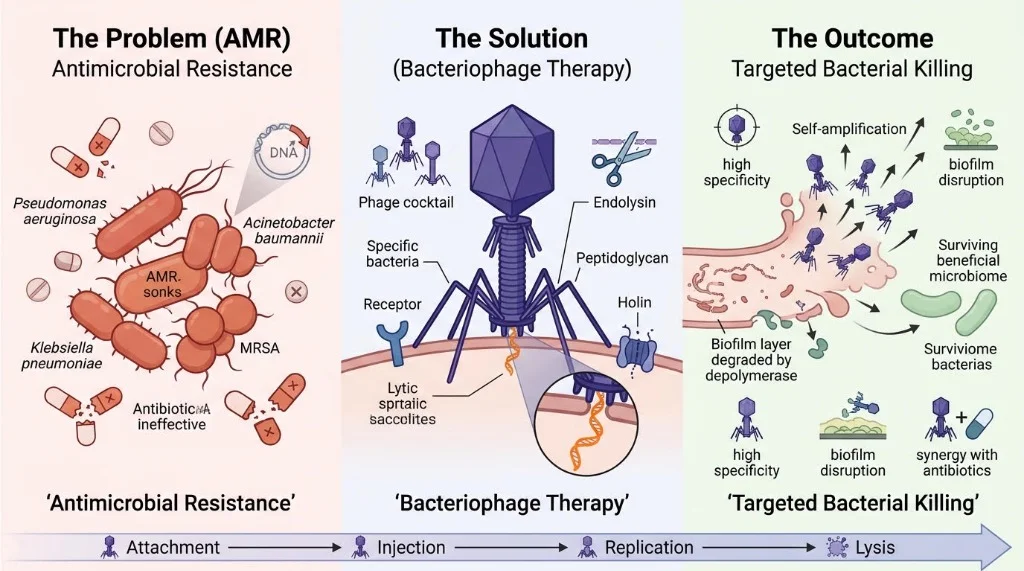 Figure 3. Comprehensive paradigm of phage therapy: addressing the AMR crisis through targeted, self-amplifying predatory viruses that disrupt biofilms and synergize with antibiotics.
Its potential advantages include targeted bacterial killing, activity against selected multidrug-resistant organisms, possible biofilm disruption, and opportunities for combination treatment with antibiotics. However, narrow host specificity, phage resistance, immune clearance, manufacturing complexity, and limited large-scale clinical trials continue to restrict routine clinical adoption.
The future of phage therapy will likely depend on personalized treatment strategies, carefully selected phage cocktails, improved delivery systems, standardized quality control, and well-designed clinical trials. Rather than replacing antibiotics entirely, bacteriophages may become valuable partners in modern antimicrobial treatment.