- 1 What Is Shamonda Virus?
- 2 The First Documented Human Infection
- 3 Spread of Shamonda Virus
- 4 Could humans become infected through insect bites?
- 5 Why Is the European Outbreak Important?
- 6 What Does This Mean for Human Health?
- 7 The One Health Connection: Why Human, Animal, and Environmental Health Matter
- 8 Detection and Monitoring of Shamonda Virus?
- 9 What Should Be the Next Steps?
- 10 Conclusion
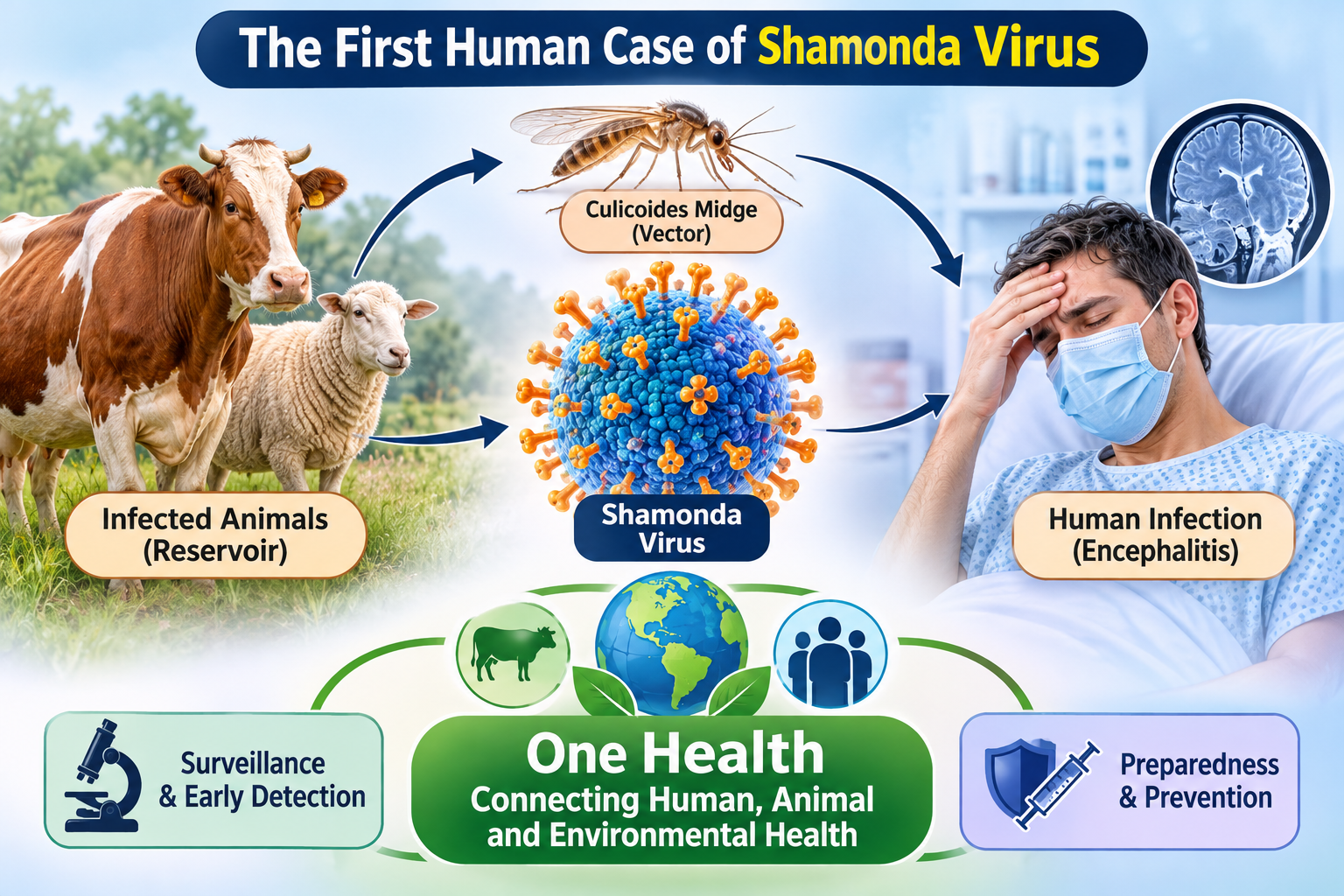
For years, Shamonda virus was primarily known as an animal-associated virus, identified in livestock populations and linked to infections in ruminants. Human infection had not been documented, and the virus received relatively little attention outside veterinary virology. That changed in October 2026, when French health authorities reported the first laboratory-confirmed human infection with Shamonda virus (SHAV). The case involved a severely immunocompromised patient in France who developed encephalitis, a serious inflammation of the brain. The patient subsequently died, although the extent to which the virus contributed to the fatal outcome remains an important clinical consideration. This discovery attracted international attention because it demonstrated that a virus previously considered primarily an animal pathogen could also infect humans. However, the finding should not be interpreted as evidence of a new human pandemic. Instead, it highlights an important issue in infectious disease research: pathogens circulating in animals can occasionally cross species barriers, and identifying these events early requires cooperation between human medicine, veterinary science, and environmental surveillance. This is where the One Health approach becomes particularly important.
What Is Shamonda Virus?
Shamonda virus (SHAV) is an enveloped, negative-sense, single-stranded RNA virus belonging to the family Peribunyaviridae and genus Orthobunyavirus. It is classified within the Simbu serogroup and is closely related to Schmallenberg virus. The virus was first isolated from cattle in Nigeria in 1965. Since then, it has been identified in animals across parts of Africa and Asia, including Japan. For many years, its importance was mainly associated with animal health rather than human disease.
Shamonda virus has a segmented RNA genome consisting of three separate segments:
- L segment (Large): Encodes the viral RNA-dependent RNA polymerase, which is responsible for viral genome replication and transcription.
- M segment (Medium): Encodes the viral glycoprotein precursor, which produces the envelope proteins involved in viral attachment and entry.
- S segment (Small): Encodes the nucleocapsid protein and a non-structural protein involved in viral replication and interactions with the host.
Like other orthobunyaviruses, its segmented genome provides opportunities for genetic reassortment when different related viruses infect the same host cell. This genetic flexibility is important when studying the emergence and evolution of new viral variants.
The First Documented Human Infection
In October 2026, France reported the first laboratory-confirmed human infection with Shamonda virus. The patient was an older adult with a severely weakened immune system who was already receiving treatment for a serious underlying illness. The patient had also undergone an allogeneic stem cell transplantation approximately one month before developing severe neurological symptoms. The clinical presentation included neurological abnormalities, such as visual disturbances, confusion, loss of consciousness, and seizures. Further investigation identified viral genetic material in cerebrospinal fluid (CSF), suggesting involvement of the central nervous system. Researchers used metatranscriptomic sequencing to identify Shamonda virus RNA. The finding was subsequently confirmed using reverse transcription polymerase chain reaction (RT-PCR). Additional investigations detected viral RNA in several biological samples, including serum, respiratory material, and stool. Post-mortem tissue investigations also demonstrated high viral genomic loads in the brain and other organs. The patient died in October 2026.
Importantly, the case occurred in a person with profound immunosuppression. Therefore, it is not yet possible to determine how Shamonda virus infection would affect otherwise healthy individuals. The case also does not establish that Shamonda virus was the sole cause of death, given the patient’s underlying medical condition. This first report provides evidence that human infection is possible, but much more research is needed to understand its clinical significance.
Spread of Shamonda Virus
Shamonda virus is generally considered a vector-borne animal pathogen. Its transmission is associated primarily with biting midges belonging to the genus Culicoides. These small insects can acquire the virus while feeding on infected animals and potentially transmit it to other susceptible hosts. Culicoides midges are important vectors for several livestock-associated viruses, including Schmallenberg virus and bluetongue virus. In animals, Shamonda virus transmission is not generally considered to occur through ordinary direct contact between infected and healthy individuals. However, vertical transmission from an infected mother to her developing fetus can occur.
Could humans become infected through insect bites?
Following the first human case, exposure to infected biting midges became one of the leading hypotheses. The patient lived in eastern France, an area where animal infections had been identified. Mosquito exposure was also reported during the epidemiological investigation. However, the exact transmission route has not been established. Although related orthobunyaviruses demonstrate that vector-mediated human infection is biologically possible, this does not independently prove that the same transmission pathway occurred in the Shamonda virus case. Researchers are continuing to investigate the possible involvement of biting midges and other potential exposure routes.
Why Is the European Outbreak Important?
The discovery of human infection occurred during a period of increasing Shamonda virus activity in European livestock. During the summer of 2026, new Shamonda virus variants were detected in several European countries, including Germany, France, Belgium, Switzerland, and the Netherlands. Two important European variants have been identified:
- SHAV-EU1: Detected in several European countries, including France, Germany, and Switzerland. This was the variant identified in the first human case.
- SHAV-EU2: Detected in other European livestock populations, including parts of Germany, Belgium, and the Netherlands.
These variants emerged through genetic reassortment involving ancestral Shamonda virus strains. The spread of the virus across different livestock populations raised concerns about animal health, vector distribution, and the possibility of exposure beyond previously affected regions. In cattle, reported clinical signs include fever, diarrhoea, reduced appetite, lethargy, and decreased milk production. Infections during pregnancy may also raise concerns about reproductive complications and fetal development, although the full effects of the newly identified European variants require further investigation. The geographical spread of infected livestock and the distribution of potential insect vectors make continued veterinary surveillance particularly important.
What Does This Mean for Human Health?
The first documented human infection raises several important scientific questions. Does Shamonda virus have the ability to infect humans more frequently than previously recognized? Can it cause disease in individuals with normal immune function? Which insect species can transmit it to humans? Could other transmission routes be involved? At present, these questions remain unanswered. The first reported patient was severely immunocompromised, making it difficult to predict the disease’s behavior in healthy individuals. There is currently no established evidence of sustained human-to-human transmission. Investigations have also examined the possibility of transfusion-associated transmission. Although testing of blood donors linked to the patient’s transfusions was negative, the investigation has emphasized the importance of carefully evaluating potential exposure routes. For now, the available evidence does not justify assuming that Shamonda virus poses a widespread threat to the general population. Instead, it demonstrates why emerging animal viruses deserve scientific attention before their public health implications become clearer.
The One Health Connection: Why Human, Animal, and Environmental Health Matter
The Shamonda virus case is a useful example of why infectious diseases cannot always be understood by studying human patients alone. The One Health approach recognizes that human health, animal health, and environmental conditions are closely interconnected. In the case of Shamonda virus, these three areas are directly linked.
- Human health: The first confirmed human infection highlights the need for clinical awareness, appropriate molecular diagnostics, and investigation of unusual neurological infections in individuals with relevant animal or vector exposure.
- Animal health: Livestock surveillance helps identify infected herds, monitor disease distribution, and detect emerging viral variants before additional spillover events occur.
- Environmental health: The distribution and activity of Culicoides biting midges influence the opportunities for viral transmission. Temperature, rainfall, humidity, and changes in insect habitats can affect vector populations and their geographical distribution.
These factors demonstrate why a human-only surveillance system may fail to identify important early warning signs. For example, an increase in unexplained livestock infections may provide an early indication that a virus is circulating in a particular region. Veterinary laboratories can investigate these cases and share findings with public health authorities. Similarly, entomological studies can help identify the insect species responsible for transmission and determine where surveillance efforts should be concentrated. The One Health framework encourages these different sectors to share information rather than work independently.
Detection and Monitoring of Shamonda Virus?
Laboratory diagnostics are essential for identifying Shamonda virus infections and understanding its geographical distribution. Because its clinical presentation can overlap with other viral infections, laboratory confirmation is particularly important. Several molecular and genomic techniques can support investigations.
RT-PCR
Reverse transcription PCR can detect specific regions of the Shamonda virus RNA genome. It is useful for confirming suspected infections in human and animal samples, particularly when validated assays targeting appropriate genomic regions are available.
Metagenomic sequencing
Metagenomic sequencing can identify genetic material from a broad range of microorganisms without requiring researchers to know the exact pathogen in advance. This was particularly important in the first documented human case, where metatranscriptomic sequencing helped identify Shamonda virus in cerebrospinal fluid.
Whole-genome sequencing
Sequencing viral genomes allows researchers to compare circulating strains, identify genetic variations, investigate reassortment events, and track the geographical movement of different viral lineages.
Serological testing
Serological investigations can help determine whether individuals or animal populations have previously been exposed to the virus.
However, assays must be appropriately validated, particularly when closely related orthobunyaviruses may produce cross-reactive antibody responses. Combining molecular diagnostics, sequencing, and serological investigations provides a more complete understanding of viral circulation than relying on a single laboratory method.
What Should Be the Next Steps?
The first human case should encourage further investigation rather than unnecessary alarm. Several areas deserve attention:
- Improved surveillance: Monitor livestock populations and investigate unusual human neurological infections when exposure history is compatible.
- Vector identification: Determine which Culicoides species are capable of transmitting Shamonda virus.
- Genomic monitoring: Track emerging viral variants and investigate genetic reassortment.
- Diagnostic development: Improve the availability and validation of molecular and serological assays.
- Clinical investigation: Study the possible effects of infection in different immune-status groups.
- Cross-sector collaboration: Encourage information sharing between hospitals, veterinary laboratories, research institutes, and public health authorities.
There is currently no specific approved antiviral treatment or vaccine for Shamonda virus. Consequently, surveillance, early detection, and appropriate preventive measures remain important priorities.
Conclusion
The first documented human infection with Shamonda virus in France represents an important development in emerging infectious disease research. For decades, the virus was primarily associated with animal infections. Its detection in a severely immunocompromised human patient demonstrates that the species barrier is not necessarily absolute. However, one confirmed human case is not enough to establish how frequently human infections occur, how severe the disease may be in different populations, or whether transmission between humans is possible. The event also reinforces an important lesson in modern microbiology: emerging infectious diseases require more than clinical diagnosis and treatment. They require coordinated surveillance of humans, animals, and the environments in which pathogens circulate. The One Health framework provides exactly this type of integrated approach. As research continues, Shamonda virus will be an important example of why veterinary microbiology, molecular virology, vector surveillance, and human public health must work together to identify and understand emerging zoonotic threats.