- 1 What Is Hantavirus?
- 2 Understanding Andes Virus: What Makes It Different?
- 3 What Happened During the 2026 Andes Virus Outbreak?
- 4 Why Did the Outbreak Not Become Another COVID-19?
- 5 How Does Andes Virus Cause Severe Respiratory Disease?
- 6 Why Is Andes Virus More Concerning Than Other Hantaviruses?
- 7 What Does the 2026 Outbreak Teach Us About Pandemic Preparedness?
- 8 How Can Hantavirus Infection Be Prevented?
- 9 Current Pandemic Risk
- 10 Conclusion
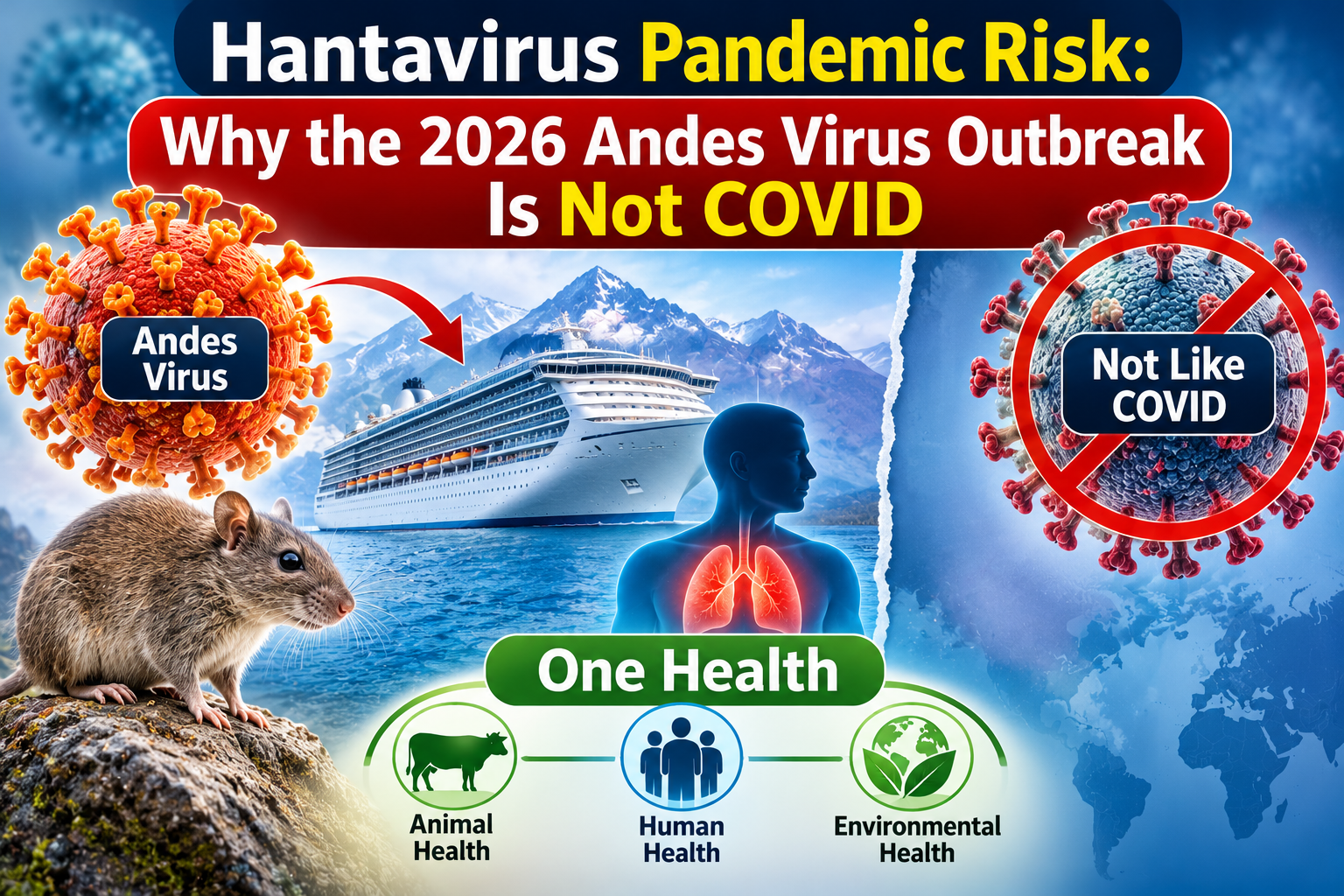
When news of a hantavirus outbreak aboard an international cruise ship emerged in May 2026, it quickly attracted worldwide attention. Several passengers developed severe respiratory illness, some died, and health authorities began coordinating international contact tracing and quarantine measures. Naturally, comparisons with the COVID-19 pandemic started appearing across social media and news platforms. But is another pandemic developing?
The outbreak involved Andes virus (ANDV), a member of the hantavirus group that is primarily transmitted from infected rodents to humans. Unlike most hantaviruses, Andes virus has also demonstrated the ability to spread between people under certain circumstances. This makes it particularly interesting from an epidemiological perspective. However, there is a major difference between an infectious disease that can occasionally spread between humans and one that spreads efficiently through communities. The 2026 outbreak demonstrated that Andes virus can cause severe disease and limited person-to-person transmission, but it did not show the sustained transmission dynamics associated with COVID-19. Understanding this distinction requires looking at the virus itself, its transmission routes, clinical presentation, and the epidemiological evidence from the 2026 outbreak.
What Is Hantavirus?
Hantaviruses are a group of zoonotic RNA viruses belonging to the family Hantaviridae, order Bunyavirales. They naturally circulate in rodent populations, although different hantavirus species are associated with different rodent hosts and geographical regions. Humans generally become infected through exposure to contaminated rodent urine, saliva, or droppings. When these materials dry, virus-containing particles may become airborne and enter the respiratory tract when inhaled. Hantavirus infections can cause two major clinical syndromes depending on the virus and geographical region.
Hantavirus pulmonary syndrome (HPS), also called hantavirus cardiopulmonary syndrome (HCPS)
This syndrome is primarily associated with hantaviruses circulating in the Americas. It affects the lungs and cardiovascular system and can rapidly progress to respiratory failure and shock.
Hemorrhagic fever with renal syndrome (HFRS)
This syndrome is associated mainly with hantaviruses circulating in Europe and Asia. It primarily affects the kidneys and blood vessels and can cause acute kidney injury, bleeding abnormalities, and hypotension.
Andes virus belongs to the group of New World hantaviruses associated with pulmonary and cardiopulmonary disease. Its ability to cause occasional human-to-human transmission makes it particularly important compared with most other known hantaviruses.
Understanding Andes Virus: What Makes It Different?
Andes virus is primarily associated with South America, particularly Argentina and Chile. Its natural reservoir is the long-tailed pygmy rice rat (Oligoryzomys longicaudatus). The virus can circulate within rodent populations without necessarily producing the same severe disease observed in humans. Human infection usually occurs following exposure to infected rodents or environments contaminated with their excretions. However, Andes virus has one unusual characteristic: it is the only hantavirus for which human-to-human transmission has been documented. Transmission between people is uncommon and has generally been associated with close and prolonged contact, particularly among household members, intimate partners, and other individuals with substantial exposure to an infected person. This is an important distinction. Andes virus is capable of spreading between humans, but it does not behave like a highly transmissible respiratory virus that can rapidly move through a population following brief everyday interactions.
What Happened During the 2026 Andes Virus Outbreak?
The international outbreak was first reported to the World Health Organization on 2 May 2026. A cluster of severe respiratory illnesses had developed aboard the MV Hondius, an international cruise ship carrying passengers and crew members from multiple countries. Initial reports described passengers experiencing fever, gastrointestinal symptoms, and respiratory complications. Some patients deteriorated rapidly, developing severe respiratory failure and cardiovascular instability. Subsequent laboratory investigations identified Andes virus as the cause of the outbreak.
The international investigation eventually reported:
- 13 total cases, including confirmed and probable infections.
- Three reported deaths.
- Cases involving passengers and crew members associated with the cruise ship.
- International contact tracing involving individuals from multiple countries.
The observed case-fatality proportion was approximately 23% (3 deaths among 13 reported cases). However, this figure should not be interpreted as the expected fatality rate for every Andes virus infection. The outbreak attracted attention because it involved an unusual transmission setting. Cruise ships contain shared indoor spaces, dining facilities, cabins, and common recreational areas. Passengers and crew members may spend extended periods in close proximity. These conditions can increase opportunities for exposure when a pathogen capable of limited person-to-person transmission is introduced. Importantly, the outbreak was subsequently declared over by WHO on 2 July 2026.
Why Did the Outbreak Not Become Another COVID-19?
This is probably the most important question surrounding the 2026 outbreak. Both Andes virus and SARS-CoV-2 can cause serious respiratory disease, but their transmission patterns are very different. The main difference is how efficiently they spread between humans. SARS-CoV-2 demonstrated sustained human-to-human transmission through respiratory particles, allowing it to spread rapidly through households, workplaces, public transportation, and communities. Andes virus behaves differently. Most hantavirus infections begin with exposure to infected rodents or their contaminated environments. Although Andes virus can occasionally spread between people, documented transmission generally involves close and prolonged exposure. This means that the presence of an infected individual does not automatically create the same level of transmission risk associated with COVID-19.
Several factors help explain the difference:
Different primary transmission routes
Most hantaviruses are acquired from infected rodents. Andes virus also has a documented human-to-human transmission pathway, but rodent exposure remains central to its natural transmission cycle.
Limited human-to-human transmission
Available evidence indicates that transmission between people is uncommon and generally associated with substantial close contact.
Different outbreak dynamics
The 2026 event produced a limited cluster rather than sustained community transmission across multiple countries.
Effective contact tracing
International health authorities identified and monitored exposed individuals, helping prevent additional transmission.
No evidence of COVID-like transmissibility
The outbreak investigations did not demonstrate the widespread, sustained transmission dynamics seen with SARS-CoV-2.
The important lesson is that the ability to transmit between humans does not automatically mean that a virus has pandemic potential.
How Does Andes Virus Cause Severe Respiratory Disease?
Understanding the pathogenesis of Andes virus helps explain why infection can become life-threatening even when transmission between people is relatively limited. Following infection, the virus interacts with cells of the vascular endothelium, which form the inner lining of blood vessels. Endothelial dysfunction and altered vascular permeability are important features of hantavirus disease. As the infection progresses, increased vascular permeability allows fluid to move from blood vessels into surrounding tissues. In the lungs, this can result in pulmonary edema, making normal gas exchange increasingly difficult.
Patients may develop:
- Fever and chills.
- Severe muscle aches.
- Headache and fatigue.
- Nausea, vomiting, and abdominal discomfort.
- Cough and progressive breathing difficulties.
- Hypotension and cardiovascular instability.
- Acute respiratory failure.
One concerning feature of hantavirus pulmonary syndrome is that patients may initially experience nonspecific symptoms before deteriorating rapidly. This makes early clinical recognition particularly important. Severe cases may require intensive care, oxygen support, mechanical ventilation, and advanced cardiovascular management.
Why Is Andes Virus More Concerning Than Other Hantaviruses?
Most hantaviruses are not known to spread between humans. For example, Sin Nombre virus, an important cause of hantavirus pulmonary syndrome in North America, is primarily transmitted through exposure to infected rodents and their excretions. Similarly, many hantaviruses associated with hemorrhagic fever with renal syndrome are acquired through rodent-associated environmental exposure. Andes virus is different because epidemiological investigations have documented transmission between infected individuals. This characteristic makes it an important subject for research into zoonotic spillover and emerging infectious diseases. However, it is important not to confuse a unique transmission characteristic with evidence of unrestricted spread. Andes virus remains primarily a rodent-associated zoonotic pathogen, and documented human-to-human transmission has generally been limited. Its public health importance comes from the combination of potentially severe disease and occasional interpersonal transmission.
What Does the 2026 Outbreak Teach Us About Pandemic Preparedness?
Although the outbreak did not develop into a global pandemic, it provided valuable lessons for public health systems.
Early detection matters
Recognizing unusual clusters of severe respiratory illness allows authorities to initiate laboratory investigations and implement infection prevention measures.
International cooperation is essential
The cruise ship involved individuals from several countries. Identifying exposed passengers required communication between national health authorities and international organizations.
Contact tracing remains important
Because the incubation period of Andes virus can extend to several weeks, exposed individuals may develop symptoms long after their initial contact. The CDC reported that 88 US-associated contacts completed monitoring without any secondary Andes virus infections being identified.
Genomic surveillance improves outbreak investigation
Comparing viral sequences helps researchers investigate transmission chains and distinguish genuine mutations from technical sequencing errors.
Clinical preparedness saves lives
Although there is no specific approved antiviral treatment or vaccine for Andes virus, early recognition and appropriate supportive intensive care are important for managing severe disease.
How Can Hantavirus Infection Be Prevented?
Since most hantavirus infections originate from exposure to infected rodents, prevention focuses heavily on reducing contact with rodents and their contaminated environments.
Important preventive measures include:
- Seal openings that allow rodents to enter homes and storage buildings.
- Store food in secure containers.
- Avoid accumulating rubbish and materials that attract rodents.
- Wear appropriate protective equipment when cleaning heavily rodent-infested areas.
- Ventilate enclosed spaces before cleaning them.
- Wet contaminated surfaces with an appropriate disinfectant rather than sweeping or vacuuming dry droppings.
- Follow public health guidance after known close exposure to a confirmed Andes virus case.
Healthcare facilities should also follow appropriate infection prevention and control measures when managing suspected or confirmed cases. Individuals who have had relevant exposure and develop fever, muscle aches, or breathing difficulties should seek medical assessment promptly and inform healthcare professionals about their exposure history.
Current Pandemic Risk
The most important question is whether the 2026 outbreak changed the global risk of hantavirus infection. Based on the available evidence, the outbreak did not establish sustained international transmission. WHO declared the cruise-ship outbreak over on 2 July 2026, and the European Centre for Disease Prevention and Control assessed the risk to the general population in the EU/EEA as very low. The CDC’s investigation also found no secondary infections among the 88 monitored US-associated contacts. These findings are reassuring. Nevertheless, Andes virus should not be ignored. Its ability to cause severe disease and occasionally spread between people makes continued surveillance important. Researchers also need to investigate its natural reservoir, transmission mechanisms, geographical distribution, and the factors that influence disease severity. The goal of public health surveillance is not simply to respond when a virus becomes widespread. It is to identify unusual infections early enough to prevent further transmission.
Conclusion
The 2026 Andes virus outbreak was an important reminder that zoonotic pathogens can occasionally cross species barriers and create unexpected public health challenges. However, comparing it directly with COVID-19 overlooks fundamental differences in viral transmission. Andes virus is primarily associated with infected rodents and their contaminated environments. Although limited human-to-human transmission has been documented, it generally requires close and prolonged exposure. The 2026 cruise-ship outbreak resulted in 13 reported cases and three deaths, but it was eventually contained and declared over by WHO. Rather than viewing this event as the beginning of another COVID-19 pandemic, it is more useful to understand it as an important case study in zoonotic disease surveillance, outbreak investigation, and international public health coordination. The real lesson is that pandemic preparedness depends on understanding how pathogens spread, identifying transmission risks early, and responding with evidence-based public health measures.