Bacteriology

Filamentous Bacteria

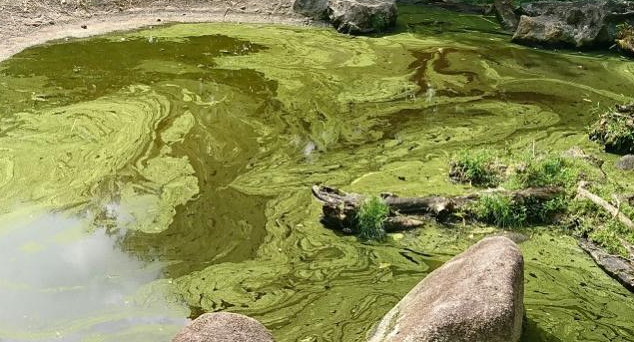
Filamentous bacteria are those bacteria that produce long mesh-like filament by growing end to end. These bacteria are seen as long strands under the microscope. These bacteria are present in sludge areas for better settling. They are also present in water treatment areas.

· Team AskMicrobiology
Read more
Bacteriology

Operon Model

Operon model was proposed by Francois Jacob and Jacques Monod.The operons are the genes that are coded for related protein. Operon consists of a regulator, promoter and the structural genes. Eukaryotic DNA has one operon for one gene that encodes only one protein. Prokaryotic DNA may have one operon for one or more protein as they have small DNA. They may encode two or three protein from the same promoter.

· Team AskMicrobiology
Read more
Bacteriology

Heterotrophic Bacteria

Heterotrophic bacteria are those bacteria that cannot prepare their own food and obtain food from the environment. These bacteria cannot convert light energy into chemical energy and need ingredients for their metabolism. These bacteria need organic carbon and can use light energy and chemical energy to obtain their biomass

· Team AskMicrobiology
Read more
Bacteriology

Photosynthetic Bacteria

Photosynthetic bacteria are those bacteria that can prepare their own food by fixing the CO2 present in the environment. These bacteria can convert light energy into chemical energy and use it for their metabolism.CO2 + H2O ➝ C6H12O6 + O2

· Team AskMicrobiology
Read more
Bacteriology

Archaea V/S bacteria

First, Archaea bacteria were classified in the eubacteria kingdom. Later in 1970, scientists separate the bacteria into two kingdoms as Archaea-bacteria and eubacteria. Below are some of the differences that are present among archaea and Bacteria.

· Team AskMicrobiology
Read more
Bacteriology

Acid fast Bacteria

Acid-fast bacteria are those bacteria that have mycolic acid in their cell wall. These bacteria stain acid-fast positive. This bacterium was first discovered...

· Team AskMicrobiology
Read more
Bacteriology

Aerobic Bacteria

Aerobic bacteria are those that can survive or grow in the presence of oxygen. They may be obligate aerobes, facultative aerobes or Microaerophilic.

· Team AskMicrobiology
Read more
Bacteriology

Iron bacteria

These bacteria deposit iron and store iron as storage granules. These bacteria cause iron to react with oxygen and form rust. They form sticky slime layers that allow them to attach and grow. These bacteria oxidize dissolved ferrous in the surroundings and use energy to survive and grow in the environment.

· Team AskMicrobiology
Read more
Bacteriology

Nitrifying Bacteria

Nitrifying bacteria are those bacteria that obtain their energy source from inorganic compound especially from nitrogen. These are chemolithotrophic bacteria that are heterotrophs and obtain energy from inorganic compounds.

· Team AskMicrobiology
Read more

Showing97–108of119results