What Kills Bacteria Fast? Bleach vs. Alcohol vs. Peroxide (Plus Fabrics & Food)
In a hypothetical scenario: You’ve just cut up some raw chicken, and now you’re eyeing the cutting board. Or maybe you’re tossing sweaty gym clothes and...
Salmonella is a tough little bug. It’s infamous for causing foodborne illness from undercooked eggs, poultry, and a variety of other foods. But beyond food,...
Cooking food isn’t just about making it taste good - it’s also our frontline defense against harmful bacteria. But how hot is hot enough to ensure our food is...
Ever wonder why we refrigerate food, or why jams and pickles last longer than fresh produce? The answer lies in understanding what bacteria need to multiply....
In the food industry, a single microscopic organism can spell disaster. We’ve all seen headlines like “Massive recall of ground beef due to E. coli” or...
Picture yourself at a family cookout on a warm afternoon. You’ve got potato salad and burgers sitting out on the picnic table while everyone chats. It’s easy...
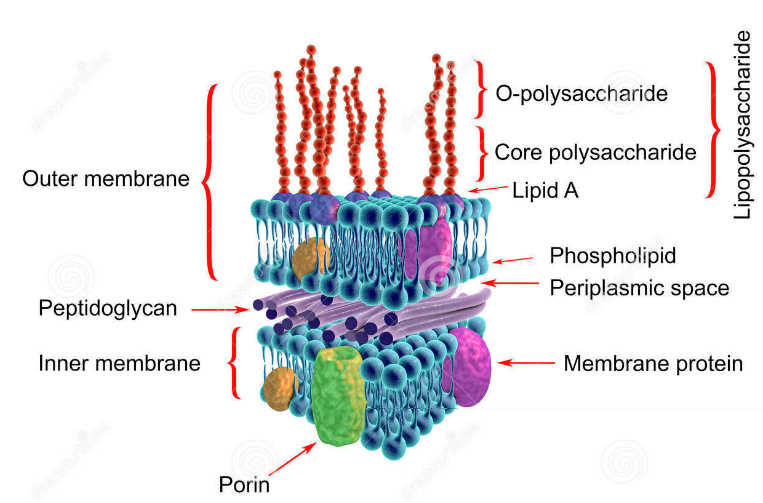
If you’ve ever had a bacterial infection and looked at a lab report, you might have seen the terms Gram-positive or Gram-negative bacteria. You also may have...
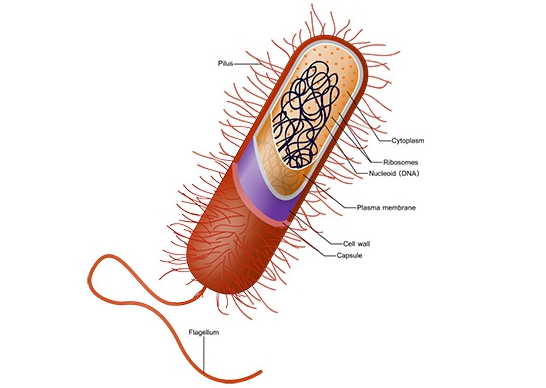
If you’ve ever taken a basic biology class, this question might sound almost too easy: Are bacteria prokaryotic or eukaryotic? The straightforward answer is...
It’s fascinating to realize that every living thing - from the bacteria in your yogurt to the cells in your own body - is built from one of two basic cell...
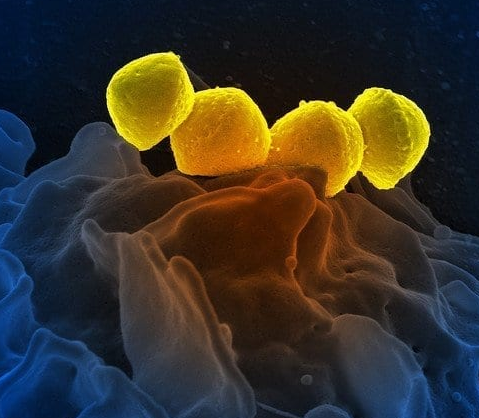
Sore throats can be confusing. You might hear a doctor say “it looks like tonsillitis,” while someone else mentions “strep throat,” and you’re left wondering -...
Tonsillitis simply means inflammation of the tonsils due to an infection. When it’s “bacterial tonsillitis,” the infection is caused by bacteria rather than a...
You wake up with a painfully sore throat and notice your tonsils are swollen. A question immediately comes to mind - is it tonsillitis, and if so, is it...
Ever notice that your bacterial vaginosis symptoms seem to get worse after sex or during certain times of your cycle? You’re not imagining it. BV symptoms can...
If you’ve ever searched online about bacterial vaginosis BV and bleeding, you probably found conflicting answers. Many sources insist that BV does not cause...
If you’ve been diagnosed with bacterial vaginosis BV and then notice a little bit of spotting, it’s natural to wonder if the two are related. Is it common to...
It’s one thing to deal with the unpleasant odor and discharge of bacterial vaginosis BV. But seeing blood on top of that can really amplify your worries. Why...
You might be familiar with the telltale signs of bacterial vaginosis BV: the fishy odor and the annoying discharge that just won’t quit. But what happens if...
When you’re first learning microbiology, all the talk of DNA and RNA can get confusing. They’re both nucleic acids, they both carry genetic information of some...
Someone once asked me, “Do bacteria have RNA, or just DNA?” It’s a great question because we often hear about bacterial DNA - the famous double helix carrying...
You’ve likely heard news about a “new strain of bacteria” causing an outbreak or read on a yogurt label that it contains Lactobacillus strain so-and-so. The...
When you think about the microscopic life teeming around us, you might picture bacteria lurking on a kitchen counter or a virus causing the flu. But have you...
You’ve just finished preparing a meal with raw chicken. The cutting board is washed, the counter looks clean, and dinner is served. But is your kitchen truly...
Our world’s soil teems with unseen partners that quietly nourish plants without any help from fertilizers. In back yards and sprawling fields, these microbes...
Imagine if plants could pull fertilizer straight out of thin air. In a sense, that’s exactly what nitrogen-fixing bacteria do. The air around us is nearly 80%...
There’s a lot going on behind the scenes of everyday life. While we go about eating, working, or scrolling through our phones, microorganisms are busy doing...
Why Plate Preparation Quality Matters Contaminated or uneven agar plates can inflate false‑positive rates by 12–25 % CDC Lab Quality Report, 2023....
What Makes the 4D Nucleofector Unique? The Lonza 4D platform combines electroporation with proprietary buffers to deliver plasmids directly into the nucleus....
!Modern lab cell homogenizer breaking down cells in a tube on a lab bench/images/posts/cellhomogenizerfeatured.png Why Homogenization Matters Efficient cell...
!High-pressure autoclave releasing steam in a laboratory with digital controls, askmicrobiology.com watermark/images/posts/autoclavefeatured.png Why Consider...
Why Temperature Control Is Critical Microbial enzymes are exquisitely temperature‑dependent. A 2022 Applied and Environmental Microbiology study of 48 E. coli...
!Olympus CH-2 microscope labeled diagram/images/posts/Microscopediagram-223x300.png Overview of the Olympus CH‑2 Series Released in the late 1980s, the...
Introduction Snail shells often display striking protrusions known as knobs—tiny, calcified bumps that can transform an ordinary spiral into a rugged fortress....
!/images/posts/afmfeatured.png Principle of AFM Atomic Force Microscopy uses a nanometer‑scale cantilever tip to map surface topography with sub‑angstrom...
!https://askmicrobiology.com/wp-content/uploads/2025/06/photo1-22.jpgOverview The condenser is the heart of a light microscope’s illumination system, focusing...
Why Organization Matters in Microbiology According to the American Society for Microbiologyhttps://asm.org 2024 Laboratory Safety Survey, 78 % of sample...
Why 100 PSI Matters In microbiology autoclaves and fermenters, overpressure incidents above 100 PSI account for 14 % of lab safety alerts OSHA, 2024. A...
!Students studying...
!150W tungsten bulbs in laboratory...
!Thermostatic incubator in microbiology...
!Laboratory...
!Analytical balance...
!Metal chamber pipe in microbiology...
!Heated water bath in microbiology...
Why Temperature Precision Matters For E. coli, a ±1 °C deviation from 37 °C can change doubling time by 18% ASM, 2024. Thermostatic incubators maintain ±0.2 °C...
Why Stainless Steel Sampling Valves Matter Stainless steel SS 316L offers 99.9% corrosion resistance against common cleaning agents and maintains surface...
Why Laminar Flow Matters in Compounding Pharmacies The U.S. Pharmacopeia USP requires ISO Class 5 air for sterile compounding. Laminar flow hoods achieve this...
Why Use a Large Vacuum Chamber in Microbiology? Vacuum chambers allow researchers to simulate low‑pressure environments, remove dissolved gases, and accelerate...
Why Steam Sterilization Matters in Food Processing Foodborne pathogens cause an estimated 600 million illnesses and 420,000 deaths worldwide each year WHO,...
Introduction Autoclaves are the backbone of sterilization in microbiology, medicine, and many industrial processes. A 2024 survey by the International...
Why Microbiology Matters in Oilfields Microbial activity can sour reservoirs, corrode pipelines, and reduce production efficiency. Understanding and...
Overview Centrifugation remains one of the fastest ways to separate microbial cells, nucleic acids, and proteins. By converting rotational speed into relative...
Introduction Gel centrifugation is a cornerstone technique for separating, purifying, and concentrating microbial samples. By applying high relative...
Bacteroides fragilis is a Gram negative pleomorphic rod shaped bacteria. It is an obligate anaerobic, non-spore forming, non-motile bacterium. Bacteroides...
Spore-forming bacteria are those bacteria that can form spores under unfavourable conditions. Spores are the dormant form of bacteria that can tolerate all the...
Imagine a small peaceful community where the good guys dominate, spreading smiles and promising wellbeing for everyone. They keep a check on everybody and make...
An antibiotic is a substance obtained from isolated cultures of certain microorganisms or is of semi-synthetic origin used to treat or prevent microbial...
Prevention from COVID-19: Starting from Wuhan City of Democratic Republic of China in early December 2019 and spreading to the whole world COVID-19 is one of...
The virus was quite unknown at the start, this thing gave birth to many rumors. One of these rumors is that virus is not heat-resistant and cannot tolerate a temperature of 26 or above and the pandemic will be over in hot summer.
Peptidoglycan is the monomeric form of carbohydrate that is found in bacteria only. This peptidoglycan is the polymers of sugar and amino acids. The sugar...
Pyogenic bacteria are those bacteria that are involved in the formation of pus. Pus is the yellowish exudate. It is formed in the site of inflammation and abscess. It is also called pus and postule.
Bacteria don’t have chloroplast. They are unicellular single-celled organisms. Their cells are prokaryotic in nature. The cells don’t have membrane-bound...
Chemotaxis is the process by which the bacteria respond to chemical gradients. Chemo means chemical and taxis means to move. It is the movement in which the bacteria and somatic cell move according to chemical gradients present in the environment.
These are the bacteria that can use iron and manganese from the water. These bacteria combine the oxygen and iron of the water and deposit it in the form of rust in water.
Both cells are Prokaryotic in nature. These cells lack membrane bound organelles and major organelles like the nucleus, Golgi apparatus, endoplasmic reticulum and mitochondria. Their genetic material is suspended in the cytosol as false nuclei. But there is no membrane around the genetic material.
These are the group of anaerobic bacteria that are capable of photosynthesis. They may be Microaerophillic bacteria. These bacteria are divided into two groups i.e. the Chromatiaceae and the Ectothiorhodospiraceae. They are different in their internal membranes structure and presence of extracellular or intracellular sulfur granules.
Atypical bacteria are those bacteria that don’t stain with the staining as they don’t contain cell wall. These are microscopic organisms, are prokaryotic and can be observed through a microscope. Examples: Chlamydiaceae, Mycoplasmataceae
These are the bacteria that love to live in a high temperature. These bacteria can survive in hot temperature.
The science in which the bacteria are classified is called bacterial taxonomy. The taxonomy is the combination of two words that is taxis means arrangement and nomos means to distribute or govern. This bacterial taxonomy refers to the three disciplines that are Classification Nomenclature Identification
Bacteria need the optimal condition for their growth. Bacteria grow best at optimum temperature, optimum pH and optimum redox reaction. Bacteria grow best at neutral pH. There are three types of classification on the basis of pH. Neutrophiles Acidophiles Basidophiles.
Gram-negative bacteria have different cell wall than Gram positive bacteria. Because of the change in cell wall stricture, the bacteria are classified as gram...
For the industrial preparation of penicillin, there are many steps that are as follows, The pure culture can be obtained either from the environment or from American type culture collection (ATCC).
Bacterial growth refers to the increase in the number of bacterial cells. Bacteria divide exponentially into the environment. Bacteria growth is represented in the form of generation time. Generation time is the time in which the bacterial cell divides into two. Read More
The capsule is the structure that acts as an invisible cloak and helps the bacteria from phagocytosis. Capsule helps bacteria to attach to the surfaces. The capsule has a sticky nature that attaches with the surface of the host cell. The fruitful attachment is responsible for the development of the disease. Without the attachment, bacteria don’t cause disease.
These bacteria grow in anaerobic conditions. They can’t use oxygen as electron terminal acceptor. They reduce inorganic sulfate into hydrogen sulfide. Sulfur accepts the electron from ETC. Some microbes assimilate sulfur to fulfil their sulfur requirement. They may use organic sulfur to fulfil their requirement.
Bacteria grow in their optimal conditions. They need optimal temperature and pH to grow. When these conditions change, bacteria are unable to grow and divide....
Pili bacteria are those bacteria that have the small hair-like appendages on the surface of bacteria. The pili have the following characteristics
Filamentous bacteria are those bacteria that produce long mesh-like filament by growing end to end. These bacteria are seen as long strands under the microscope. These bacteria are present in sludge areas for better settling. They are also present in water treatment areas.
Operon model was proposed by Francois Jacob and Jacques Monod.The operons are the genes that are coded for related protein. Operon consists of a regulator, promoter and the structural genes. Eukaryotic DNA has one operon for one gene that encodes only one protein. Prokaryotic DNA may have one operon for one or more protein as they have small DNA. They may encode two or three protein from the same promoter.
Heterotrophic bacteria are those bacteria that cannot prepare their own food and obtain food from the environment. These bacteria cannot convert light energy into chemical energy and need ingredients for their metabolism. These bacteria need organic carbon and can use light energy and chemical energy to obtain their biomass
Photosynthetic bacteria are those bacteria that can prepare their own food by fixing the CO2 present in the environment. These bacteria can convert light energy into chemical energy and use it for their metabolism.CO2 + H2O ➝ C6H12O6 + O2
First, Archaea bacteria were classified in the eubacteria kingdom. Later in 1970, scientists separate the bacteria into two kingdoms as Archaea-bacteria and eubacteria. Below are some of the differences that are present among archaea and Bacteria.
nitrifying bacteria are those bacteria that can convert nitrite into nitrate. These bacteria do this process into 2 steps. Read more
Some bacteria produce heat- sensitive toxins that are destroyed by cooking. Even small fluctuations in temperature, toxins protein denatures and breaks. When toxins protein chain breaks, it’s function loss. It is unable to produce the disease.
Acid-fast bacteria are those bacteria that have mycolic acid in their cell wall. These bacteria stain acid-fast positive. This bacterium was first discovered...
Aerobic bacteria are those that can survive or grow in the presence of oxygen. They may be obligate aerobes, facultative aerobes or Microaerophilic.
These bacteria deposit iron and store iron as storage granules. These bacteria cause iron to react with oxygen and form rust. They form sticky slime layers that allow them to attach and grow. These bacteria oxidize dissolved ferrous in the surroundings and use energy to survive and grow in the environment.
Nitrifying bacteria are those bacteria that obtain their energy source from inorganic compound especially from nitrogen. These are chemolithotrophic bacteria that are heterotrophs and obtain energy from inorganic compounds.
Encapsulated bacteria are those bacteria that contain polysaccharide capsule around their cell wall Examples: Streptococcus pneumonia, Hemophilus influenza...
Denitrifying bacteria are those bacteria that can convert the nitrate into free nitrogen. These bacteria consume the soil nitrate and convert into free nitrogen thus decrease the fertility of the soil.
Enteric bacteria are those bacteria that are present in the intestine. They belong to family Enterobacteriacea. They are gram negative rods, oxidase positive, catalase positive, non-spore former, can grow in the presence of bile salts, they are facultative anaerobes.
Anaerobic bacteria are those bacteria that cannot survive in the presence of oxygen
Fastidious bacteria are those that live on complex nutrition and need a special requirement for their growth. They have many other factors to grow properly.
Bacillus Cereus is an aerobic, motile and facultative anaerobe which also shows the property of beta hemolysis. The organism is transmitted to humans via food mainly rice kept at room temperature or reheated rice.
Centrifuge machine separates molecule on the basis of size and density. If size decrease it required high centrifugation The method in which we increase gravity by increasing rotation the increase in the centrifugal force
It an instrument which is used to measure optical density (O.D), concentration by using light, to determine conc. of solute in a solution